In goods transport, the shortest route isn't always the safest. There are about 620 km of road between Madrid and Barcelona, and a shipment can cover them in many ways: parcel network, shared load or a dedicated vehicle. For a box of screws, it doesn't matter. For audiovisual material, set pieces, designer furniture, electronic equipment, samples or precision parts, it does.
Direct transport means a single vehicle collects your goods at origin and delivers them at destination without changing truck, without passing through intermediate warehouses, and without picking up other customers' loads along the way. This guide explains when it pays off, which vehicle to use — closed van or box body — and how to prepare the load.
What "direct transport" really means
The phrase gets used loosely. In our case it means exactly this:
- A single vehicle from origin to destination. The goods don't change truck along the way.
- No intermediate logistics hubs. No sorting warehouses, no cross-docking.
- No third-party loads. We don't pick up or deliver other customers' items to fill the trip.
- A dedicated body. It only opens at loading and unloading.
- Your own schedule. It leaves when you need it, not when a chargement partagé truck fills up.
- Direct contact with the driver throughout the journey.
It's the same principle we explain in the guide on dedicated urgent transport, applied here to long hauls between major cities.
Why shared loads add risk for delicate goods
In a consolidated shipment, the goods usually pass through several hands: pickup at origin, a sorting hub, a trunk-haul truck, a destination hub and final delivery. Each step means loading, unloading, stacking and re-stowing. The most common risks are:
- More handling, more chance of knocks: every transfer is a chance for a drop, a scrape or poor stowing.
- Unknown cargo in the same body: weight on top of your items, vibration, damp or incompatible goods.
- Less predictable timing: the truck leaves once it's full and stops for additional loads.
- Less traceability: if something goes wrong, it's harder to tell which leg it happened on and who was responsible.
- Less control over delivery time, which is critical for an event, a film shoot or an installation.
What goods justify a direct transport
- Audiovisual material: cameras, lenses, monitors, lighting and flight cases. We have a specific guide on film and DIT camera transport (Spanish-language page).
- Set pieces, props and designer furniture: bulky or fragile items; see atrezzo and furniture for events (Spanish-language page).
- Non-hazardous electronic, IT and lab equipment.
- Musical instruments and sound equipment.
- Samples, prototypes and precision parts, including industrial spare parts (Spanish-language page) that have stopped a production line.
- Trade fair material and stands: see trade fair transport in Barcelona (Spanish-language page).
- Artwork and valuable items, with proper packing and a declared value.
- Any load with a critical delivery time: an event, a film shoot, a launch.
For temperature-controlled or hazardous (ADR) goods, check with us first: it's not our standard service.
Two vehicles for two kinds of direct transport: closed van and box body
A direct service doesn't have to mean a big truck. Almost anything delicate that moves between cities fits one of these two vehicles, and choosing the right one changes both the price and the quality of the transport.
Closed van (L4): agility and a well-secured load
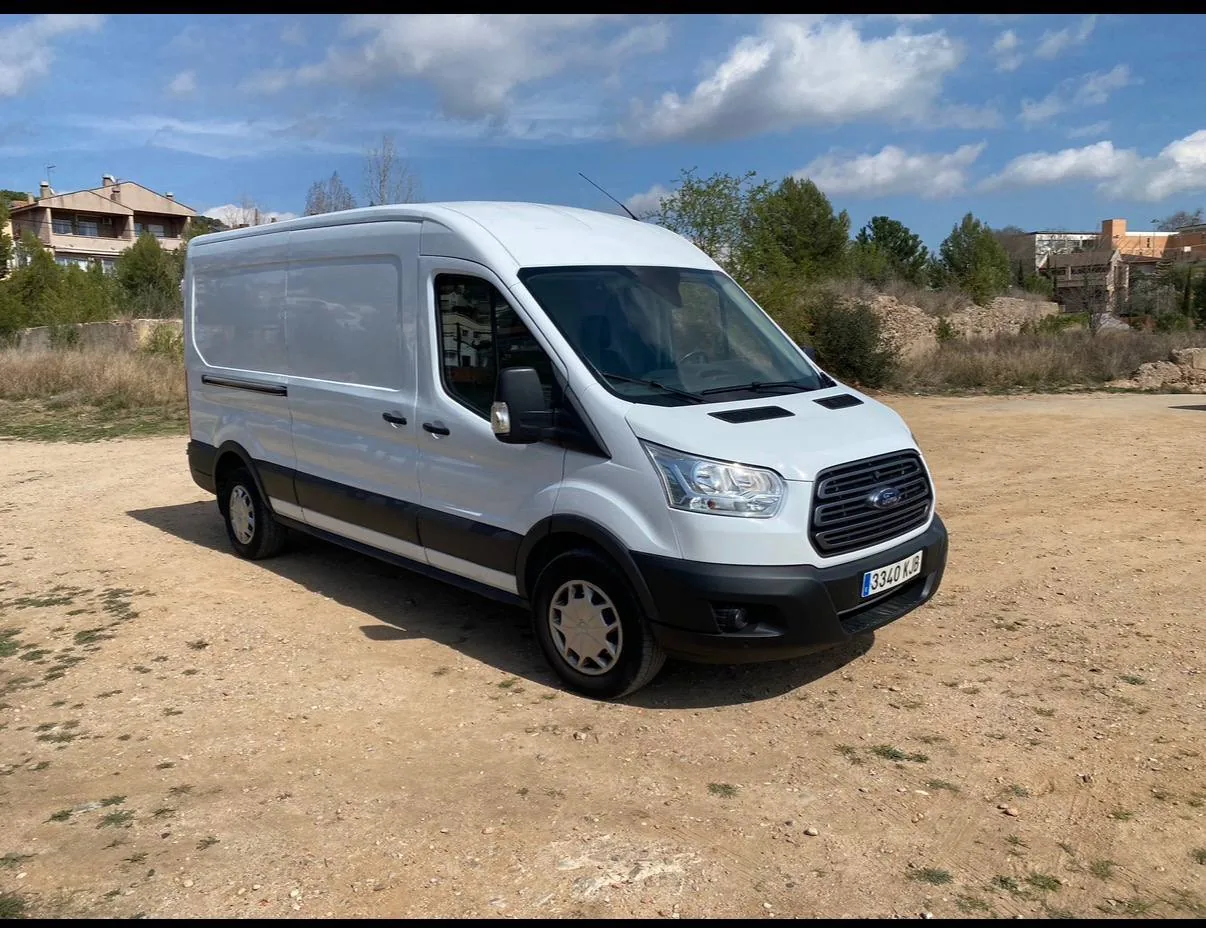
This is the integral-body van: the cab and the load area form a single piece, with no separation like a box body has. It's more agile, faster on the motorway, uses less fuel, and reaches industrial estates, hotels, film sets and urban areas more easily. It has rear and side access, and loading is at ground level, with no tail lift.
It's the natural choice for boxes, flight cases, technical equipment, samples and items that fit standing up, with a reference payload of 1,000–1,200 kg and about 8 m³ (more details on the L4 van for urgent transport page, Spanish-language).
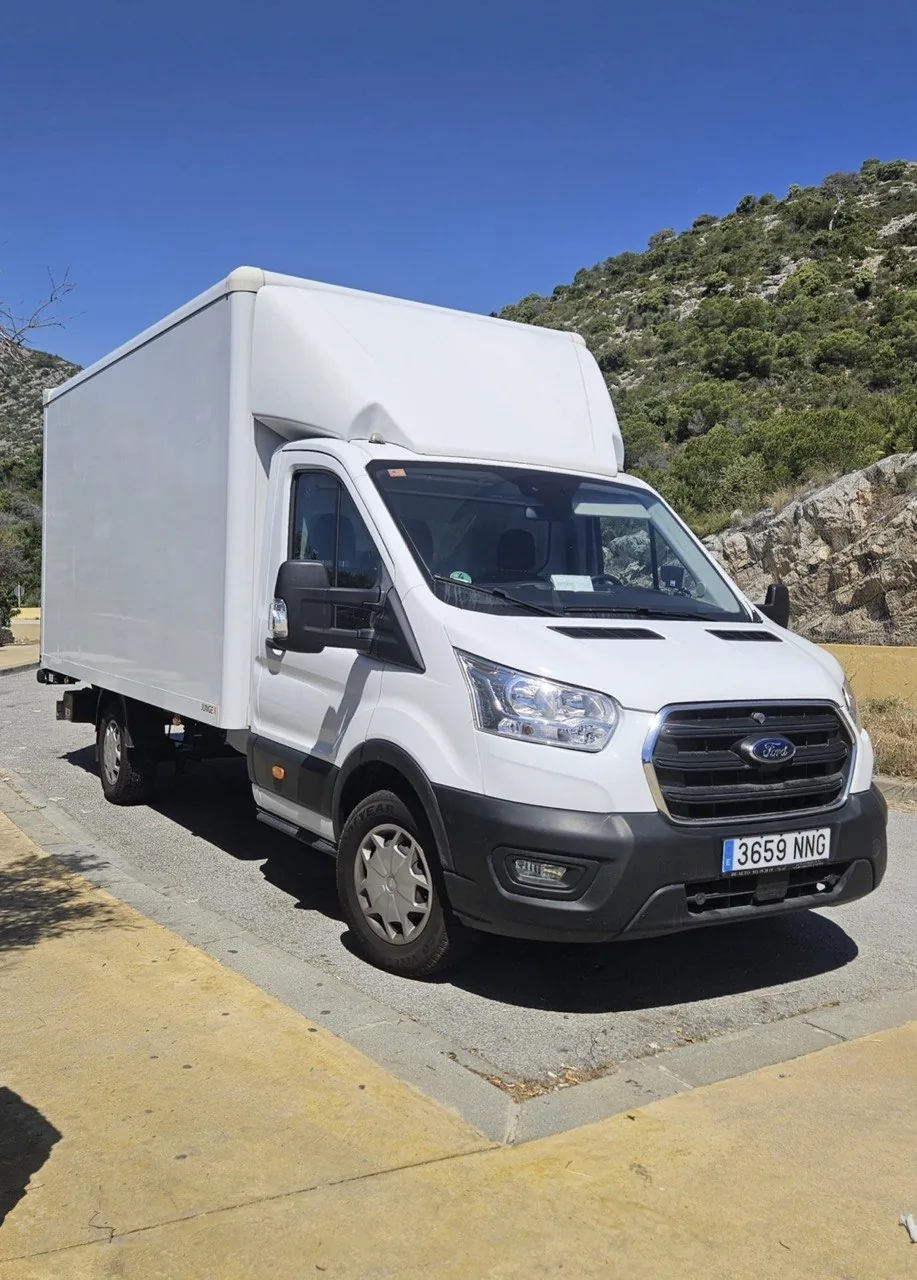
3,500 kg closed box body: more volume and a tail lift
This is a chassis with a closed body mounted on top, separate from the cab. The body has smooth, regular walls, which makes it easier to organise the load, strap it down and stop it shifting. It offers more volume than a van (room for several euro pallets) and, in versions with a tail lift, lets you load pallets and heavy pieces with no dock or forklift at destination. It's driven on a standard car licence. Details on the 3,500 kg box body with tail lift page (Spanish-language).
The trade-off on a long trip is that it's somewhat less agile than a van; in exchange it offers more volume and a better-organised load.
| Criterion | Closed van (L4) | 3,500 kg box body |
|---|---|---|
| Volume | Medium (about 8 m³) | Larger: several euro pallets |
| Body shape | Integrated into the bodywork, with wheel arches | Regular body, smooth walls |
| Loading and unloading | Ground level, rear and side access | Tail lift depending on vehicle |
| Agility and speed | High | Medium |
| Best for | Boxes, flight cases, equipment, samples | Pallets, furniture, set pieces, heavy items |
And when you need more: 12 or 18-tonne rigid truck
If the goods exceed the volume or weight of a box body, the next step up is the 12 or 18-tonne rigid truck (Spanish-language page), also run as a direct service and with a tail lift. With the dimensions and weight we'll recommend the exact vehicle; see also the guide on which vehicle you need.
How a direct service between cities is planned
These are the indicative distances and driving times for the most common corridors to and from Barcelona. They don't include loading, unloading or rest stops.
| Corridor | Distance | Driving time | Tolls and notes |
|---|---|---|---|
| Barcelona ↔ Madrid | 620 km | unas 6 horas | el corredor por la A-2 es en su mayor parte sin peaje |
| Barcelona ↔ Valencia | 350 km | unas 3 h 30 | la AP-7 tiene tramos de peaje según el recorrido |
| Barcelona ↔ Zaragoza | 315 km | unas 3 horas | el tramo de la AP-2 Zaragoza–El Vendrell es gratuito desde el 1 de septiembre de 2021; cualquier peaje de otros tramos se confirma según el itinerario |
| Barcelona ↔ Bilbao | 610 km | unas 6 horas | el recorrido por AP-68 incluye tramos de peaje |
| Barcelona ↔ Sevilla | 1000 km | unas 9 h 30 | hay tramos de peaje según la ruta elegida; para esta distancia suele valorarse conductor de relevo o descanso |
| Barcelona ↔ Málaga | 1000 km | unas 9 h 30 | hay tramos de peaje según la ruta; para esta distancia se valoran los descansos del conductor |
The routes work just as well in the opposite direction: Madrid–Barcelona, Valencia–Barcelona, and so on. Beyond these corridors, we collect and deliver anywhere on the Spanish mainland.
Departure, delivery window and rest stops
- Up to about 600 km (Madrid, Valencia, Zaragoza, Bilbao), the usual pattern is to collect in the morning and deliver the same day.
- 1,000 km trips (Seville, Málaga) call for a relief driver or a planned overnight rest; this is flagged before confirming.
- Rest stops: we respect driving and rest times. Vehicles over 3.5 t are subject to the tachograph (a 45-minute break after 4.5 hours of driving); for vehicles up to 3.5 t, we still plan stops so the driver arrives in good shape.
- Low-emission zones and access: we check the destination's restrictions (Madrid, Barcelona and other cities) before departure.
- Window and contact: we agree a delivery time and a phone number at destination; the driver calls ahead before arriving.
- Return leg: if you have goods for the return trip, let us know and we'll look at it.
How to prepare delicate goods for a direct service
- Packaging matched to value and fragility: rigid boxes, padding, corner protectors or a flight case.
- Palletise where appropriate: euro pallet, stretch film, corner protectors and strapping; nothing overhanging.
- Mark the items: fragile, orientation, non-stackable, with destination and contact.
- An inventory with photos before loading: condition and number of items.
- Securing in the vehicle: straps, anti-slip matting and blankets; heavy items at the bottom, with no gaps where the load could shift.
- Real data per item: dimensions, weight, whether it's stackable and whether it needs a specific orientation.
- Access and equipment at destination: dock, tail lift, pallet truck or staff to unload.
A well-prepared load is loaded in half the time and travels better. If in doubt, send us a photo and the measurements and we'll tell you how to prepare it.
Documentation, the value of the goods, and what to do if something goes wrong
- Transport document: the shipment travels with its transport document (consignment note), showing the sender, the recipient and the goods. Keep a copy.
- Declare the value: the carrier's legal liability for loss or damage is limited per kilo of goods. For valuable material, it's worth declaring the value and considering additional goods-in-transit insurance.
- On delivery: check the items and their condition before signing. If you spot damage, note it as a written reservation on the delivery document and take photos. Damage that isn't visible at first should be reported in writing as soon as possible, within the legal deadline.
- During the trip: the driver reports any incident; that's why direct contact matters.
Price: what affects it and when direct transport pays off
The price of a direct transport depends on the kilometres, the vehicle, the urgency, the time of day, expected waiting and tolls. We confirm a fixed price before the vehicle leaves, and we flag any extraordinary items in advance.
Our price is per vehicle and route, not per item. It pays off when the goods are delicate, have a delivery deadline, or take up a significant part of the vehicle, because the per-item cost gap narrows and the risk of transfers disappears. For a first idea, you can use our price calculator.
Information we need for a quote
- Origin and destination with address or postcode, and a contact at both.
- Pickup and delivery date and time window.
- What's being transported, number of items or pallets, dimensions and weight.
- Whether it's fragile, non-stackable or needs a specific orientation.
- Loading and unloading equipment at each point (dock, tail lift, pallet truck).
- Approximate value of the goods if you want to declare it or insure it.
Frequently asked questions about direct transport
How long does a direct Madrid–Barcelona transport take?
It's about 620 km and roughly 6 hours of driving. With loading, unloading and rests, the usual pattern is to collect in the morning and deliver the same day, depending on the pickup time, traffic and the delivery window.
Are direct transport and urgent transport the same thing?
Not exactly. Direct means one vehicle from origin to destination, with no transfers and no third-party loads. Urgent means an immediate departure. Many services are both at once, but you may need a direct service with no rush — for example, for delicate goods with a scheduled date.
Closed van or box body for delicate goods?
It depends on the volume and shape of the load. A closed van is more agile and enough for boxes, flight cases and equipment that fits standing up. A 3,500 kg box body offers more volume, regular walls for strapping, and a tail lift for pallets and heavy pieces.
Can I fill the vehicle with more of my own goods to lower the cost?
Yes, you can load more of your own items into the same service. In a direct transport we don't mix in other customers' loads: the body is yours from origin to destination.
What happens if no one is at the destination at the agreed time?
We agree a contact and a delivery window before departure. If there are long waits or schedule changes, they're flagged and agreed with the customer in advance — no surprises on the invoice.
Do you only collect in Barcelona, or anywhere in Spain?
Anywhere on the Spanish mainland. We're based in Caldes de Montbui (Barcelona); for pickups in other cities we assign the available vehicle closest to the loading point.
Have delicate goods to move between Barcelona, Madrid, Valencia or Zaragoza?
Send us the origin, destination, date, dimensions, weight and a general photo. We'll recommend a van or box body and give you a fixed price.
Request direct transport →