Treating every recurring transport job as a one-off request tends to generate admin work, vehicle changes and missing operational information. A scheduled route turns those repetitive movements into a defined operation: specific days, known stops, delivery windows and a vehicle matched to the goods.
This model can be useful for workshops, shops, production companies, distributors, warehouses and industrial businesses that need to connect suppliers, facilities, customers or points of sale between Barcelona, the Vallès and other destinations in Catalonia.
Scheduling doesn't mean the exact same items have to move every week. It means setting a base operation clear enough to coordinate the service and plan ahead for variations.
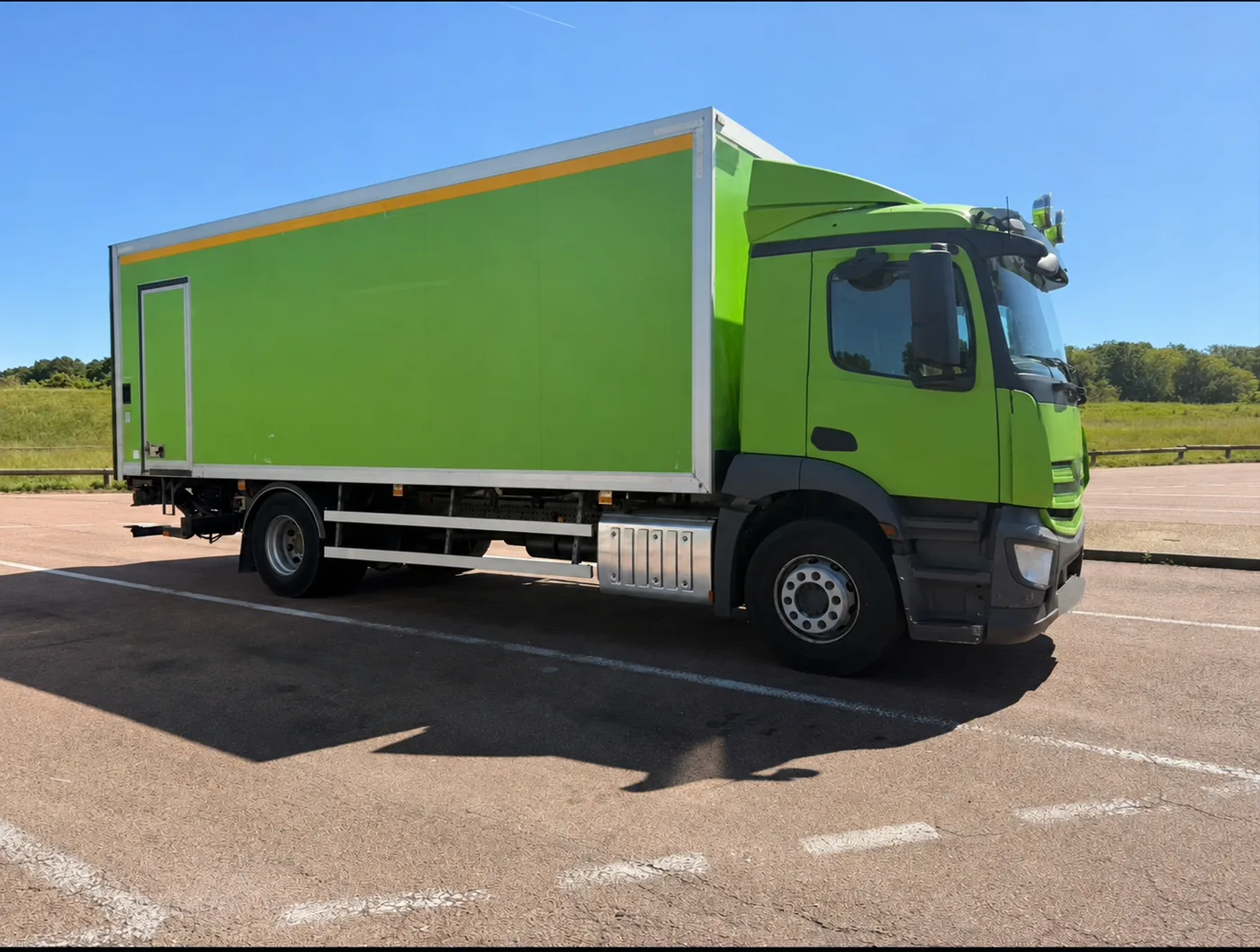
What is a scheduled transport route?
It's a service that repeats at an agreed frequency. It can run every day, on certain days of the week, once a month, or for a specific campaign.
Some common examples are:
- Collecting material from a supplier and delivering it to a warehouse.
- Distributing goods from a Vallès site to several points in Barcelona.
- Moving equipment between a warehouse, a workshop and a location.
- Restocking product or promotional material at outlets.
- Regularly connecting two work sites.
- Collecting returns or packaging after deliveries.
Unlike a one-off shipment, the route is designed around the whole operation: frequency, schedules, number of stops, typical volume, loading equipment and possible incidents.
When does it make sense to replace one-off transports with a recurring route?
The first sign is repetition. If the team keeps requesting similar journeys, it may be more practical to define a base route than to explain each job from scratch every time.
It's also worth considering when:
- Deliveries have fixed days or time windows.
- There are several stops within the same area.
- Recipients need to know the approximate schedule.
- The goods always need a specific type of vehicle.
- There are return pickups after the round.
- Someone spends too much time coordinating individual transports.
- The business needs to temporarily reinforce its distribution during a campaign.
Before deciding, it's useful to review several weeks of shipments. That way you can tell a genuinely recurring need apart from a string of separate one-off urgencies.
Information needed to design the route
Origins, destinations and the order of the stops
The address should include the postcode, a contact person and the real loading or unloading point. In industrial estates, shopping centres or venues with several access points, just giving the company name may not be enough.
For each stop, it's worth recording the full address, the receiving hours, the operational contact, the type of access, the unloading point and any documentation that needs to be handed over or signed.
The order of the stops shouldn't be decided on distance alone. A delivery with a tight schedule may have to come first even if it isn't the geographically closest point.
Time windows and operating time
A realistic route includes loading, driving, access, unloading and paperwork time. Time on the road is only part of the working day.
It's important to identify which schedules are mandatory and which allow some margin. It's also worth planning what the driver should do if the recipient isn't available, the goods aren't ready, or the unloading area is occupied.
Parking conditions and urban distribution rules can vary by municipality and area. Before activating a route, the signage, access points and rules that apply to each stop should be checked.
Characteristics of the goods
Properly sizing the service takes more than the number of packages. You need the usual and maximum number of items or pallets, the dimensions of the largest pieces, approximate weight, whether they can be stacked, fragility, and any expected variation by day or season.
If the route starts in Sabadell, Terrassa, Granollers, Mollet, Caldes de Montbui or another nearby municipality, see our goods transport service in the Vallès (Spanish-language page).
How to choose the vehicle
A route shouldn't be designed around average volume alone. The heaviest-loaded days and access restrictions matter too.
A van can suit routes with boxes, equipment or a few pallets and tight urban access. A box body offers more volume and a closed, protected space. For bulkier goods or many pallets, a rigid truck may be needed.
The guide on choosing between a van, box body or truck helps with this decision. Either way, the dimensions and weight should be confirmed before a vehicle is assigned.
Oversizing every service out of caution can make the route more expensive. Undersizing it can force a second trip. A practical approach is to define a usual capacity and a procedure for flagging days with extra load.
Loading, unloading and access
Each stop should state what equipment is available for handling the goods. Delivering to a warehouse with a dock and a forklift is not the same as delivering to a shop with no equipment of its own.
When moving pallets, flight cases or heavy pieces with no loading dock, it may be appropriate to request a truck with tail lift in Barcelona (Spanish-language page). This need should be flagged when booking the service, along with the weight and nature of the load.
It's also worth checking the height and width of access points, manoeuvring space, any restriction on vehicle type, ramps or steps, and who prepares, hands over and receives the goods.
A dedicated route or a multi-drop round
In a dedicated route, the vehicle is assigned to the operation defined by the business. It can run a direct trip or several planned stops, without taking on goods unrelated to the service.
This approach tends to be useful when coordination, schedules, the delivery sequence or keeping material together in the same vehicle matter most.
A multi-drop round requires loading in the right order. What gets delivered first needs to stay accessible, and every item needs to be labelled with its destination. Loading without the sequence in mind creates extra handling and delays.
How to prepare a comparable quote
To get a well-fitted proposal, it's worth sharing the frequency, service days, addresses, number of stops, mandatory schedules, estimated duration of each step, the type of goods, the vehicle required, any return legs and expected seasonal changes.
Cost can depend on the vehicle, distance, duration, stops, waiting and operating conditions. Our guide on the factors behind transport pricing explains what needs reviewing, though a recurring route needs a specific assessment.
Common mistakes
One of the most common mistakes is planning around ideal schedules, without accounting for loading, parking or waiting. Another is choosing the vehicle based on a low-volume week.
- Giving incomplete addresses.
- Not identifying the contact for each delivery.
- Preparing items without marking the destination.
- Reporting changes once the vehicle is already on the road.
- Not flagging returns or extra pickups.
- Assuming every destination has a loading dock.
- Mixing extraordinary urgencies into the regular route without reviewing the impact.
Setting up a communication channel and a cut-off time for reporting changes helps keep the route running smoothly.
Checklist before starting
- Calendar, frequency and the final list of stops.
- Contacts and loading/delivery windows.
- Usual and maximum volume, weight and dimensions.
- Proposed vehicle and loading/unloading equipment.
- Order in which items should be prepared.
- Required documentation.
- Procedure for incidents and additional services.
Scheduled routes from Barcelona and the Vallès
On Set Transporte runs both one-off and scheduled services for businesses, with vehicles from vans to trucks and tail-lift options depending on the job.
To look into a route, send us the days, addresses, schedules, number of stops and a description of the goods. We'll review the route, the access points and the right vehicle before preparing a quote.
Request a proposal for your route
Tell us the frequency, stops, schedules and load. We'll prepare a proposal adapted to the operation, subject to availability.
Request a quote →