"Industrial machinery" is a broad term, and not everything that falls under it travels the same way. A generator, a compressor, a production machine or a dismantled line can be loaded with a tail lift, just like any heavy pallet. An excavator, a backhoe loader or a dumper are a different matter: self-propelled vehicles loaded by ramp onto a low-loader, a specialised type of transport that isn't ours.
This guide explains what machinery we move, with which vehicle, and how to prepare the shipment, so you know upfront whether your equipment fits this service.
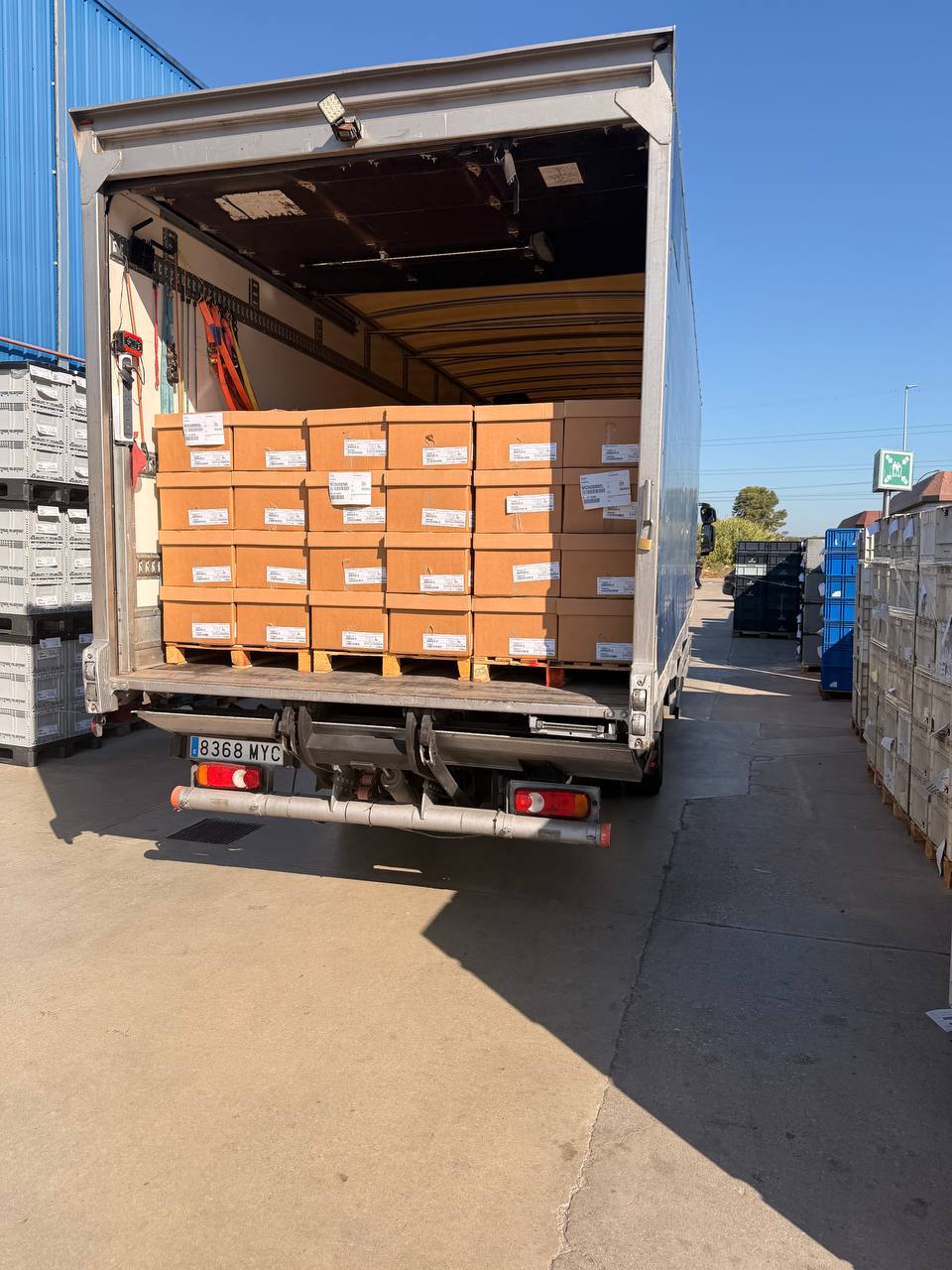
What machinery we transport
- Generators, compressors and generator sets.
- Production machines, packaged or on skids.
- Manufacturing lines dismantled into modules or pieces.
- Hospitality, industrial laundry or climate-control machinery.
- Machine tools (lathes, milling machines, presses) in factory packaging.
- Small agricultural machinery or implements that can be palletised.
- Spare parts and heavy components; see also our guide on urgent industrial spare parts in the Vallès.
What we don't do: self-propelled construction vehicles
Excavators, backhoe loaders, wheel loaders, mini-loaders, dumpers, or any machine that moves itself on tracks or wheels, need a low-loader with access ramps, along with the specific approval and tie-down required for that kind of load. That's not the service we offer: if you have this type of machinery, it's worth looking for a carrier specialised in low-loaders.
Which vehicle is used for industrial machinery
The same criteria as any heavy-goods transport: weight, dimensions and the shape of the machine decide the vehicle.
| Machine or equipment | Recommended vehicle | How it's loaded |
|---|---|---|
| Small or medium equipment, packaged or on a pallet | 3,500 kg box body with tail lift (Spanish-language page) | Tail lift, no dock or forklift needed at destination |
| Large machines or lines dismantled into several items | 12 or 18-tonne rigid truck (Spanish-language page) | Tail lift depending on vehicle, more volume and payload |
| One urgent, standalone component | L4 express van (Spanish-language page) | Ground-level loading if weight and size allow |
If the machine exceeds the weight or volume of a rigid truck, or needs a low-loader with ramps, we can still coordinate the service, but a specialised vehicle for that specific load should be considered.
How to prepare the transport of a machine
- Real weight and dimensions (length, width, height), including any protruding parts.
- How the machine is prepared: packaged, on skids, palletised or loose.
- Centre of gravity: if it's a tall machine or the weight is unevenly distributed, flag it; it affects how it's lifted with the tail lift.
- Fluids: whether it contains oil, fuel or liquids that need draining or sealing before transport.
- Loose or protruding parts: protect or remove anything that could snag or shift during the trip.
- Access at origin and destination: doorway, ramp, ground-level changes and manoeuvring space for the vehicle.
- Unloading equipment at destination: whether a pallet truck, forklift or staff is needed on arrival.
With this information and a few photos, we confirm the vehicle and whether the job can be done with a tail lift or needs extra equipment.
When this service is needed
- Moving machinery when buying or selling second-hand equipment.
- Changing industrial premises or relocating a production line.
- Delivering new machinery from a manufacturer or importer to the end customer.
- An urgent shipment of a machine or a heavy component that has stopped production.
Capacity of each vehicle for moving machinery
- 3,500 kg box van with tail lift: 4.2 × 2 × 2.2 m body, up to 8 Euro pallets and 1,000 kg of cargo; the tail lift raises up to 700 kg per operation.
- 12 t rigid truck: 7.7 × 2.4 m body and 2.2 m height, 18 Euro pallets, 5,000 kg payload and a 1,500 kg tail lift.
- 18 t rigid truck: 7.7 × 2.4 m body and 2.5 m height, 18 Euro pallets, 9,000 kg payload and a 2,000 kg tail lift.
To raise or lower a machine with the tail lift, each piece must weigh less than the lift's limit. If it weighs more, a forklift or crane is needed at the loading or unloading point.
Indicative rates for machinery transport
- 3,500 kg box van with tail lift: €35/hour with a 4-hour minimum in Barcelona and the Vallès; €1.20/km with a €120 minimum on national routes.
- 12 t rigid truck: €40/hour with a 4-hour minimum; €1.40/km with a €200 minimum.
- 18 t rigid truck: €40/hour with a 4-hour minimum; €1.50/km with a €240 minimum.
Reference rates, plus VAT. If the manoeuvre needs helpers, long waits or difficult access, the price may vary; we confirm it before departure.
Price and coverage
The price depends on the vehicle, the kilometres, the weight and how complex the loading and unloading are. We confirm a fixed price before the vehicle leaves. Coverage across Barcelona, the Vallès and all of Catalonia, with national routes when the machine is coming from elsewhere or heading to another region. For a first idea, you can use our price calculator.
Information we need for a quote
- Type of machine and whether it's packaged, on skids or palletised.
- Real weight and dimensions.
- Origin and destination, with access points and any ground-level changes.
- Whether a tail lift is needed or the client has their own loading equipment.
- Date and urgency of the service.
Frequently asked questions about industrial machinery transport
Do you transport heavy construction machinery, like excavators or backhoe loaders?
No. Self-propelled construction vehicles (excavators, backhoe loaders, wheel loaders, dumpers) are moved on a low-loader with access ramps, a different type of transport from ours. We handle industrial machinery and equipment that's packaged, on skids or palletised, loaded with a tail lift.
What weight can the vehicle take?
The L4 van takes up to 1,300 kg, the 3,500 kg box van with tail lift up to 1,000 kg, and the 12 t and 18 t rigid trucks up to 5,000 and 9,000 kg of payload. But the weight of each piece is also limited by the tail lift: 700 kg on the box van, 1,500 kg on the 12 t truck and 2,000 kg on the 18 t truck. With the real weight and dimensions of the machine, we'll confirm the right vehicle.
What if a piece weighs more than the tail lift can raise?
A lifting aid is needed at both the pickup and delivery points: a forklift with enough capacity or a crane. Before confirming the service we check with the customer what equipment is available at each end; if there is none, it has to be arranged separately.
Do you need a crane to load the machine?
If the machine is on a pallet or stable skids and its weight is within the tail lift's capacity, no crane is needed. If the centre of gravity is high, uneven, or the weight exceeds what the tail lift can handle, loading with the client's own equipment, or a separate crane service, may be necessary.
Can I ship the machine on its own packaging or wooden skids?
Yes, as long as it's properly secured and the whole unit is stable enough to lift with the tail lift. If it has loose parts, cables or protruding elements, they should be protected or removed before transport.
Do you cover all of Catalonia?
Yes, based at Caldes de Montbui (Vallès), with service in Barcelona, the Vallès and the rest of Catalonia; we also run national routes when the machine is coming from elsewhere or going to another region.
What documentation do I need to prepare?
The machine's technical specs (weight, dimensions, whether it contains fluids), and if it's changing ownership or tax location, whatever documentation that operation requires. For the transport itself, the weight, dimensions and access details are enough.
Have a machine or piece of industrial equipment to move?
Tell us the weight, dimensions and how the load is prepared. We'll confirm whether a tail lift solves it and give you a fixed price.
Request machinery transport →